

How We’re Really Doing:
2026 State of Stigma Report
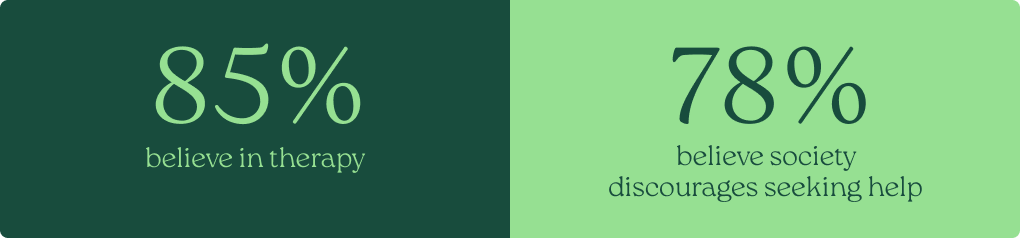
We conducted a representative survey of 2,000 Americans. The result? 85% feel that mental health support is essential—yet most still don’t seek out therapy. Our 2026 report reveals why.
Download the Report Start TherapyBelief vs. Action:
The Contradiction Continues
Last year, 3 in every 4 respondents agreed that accessing mental health support was wise for people to maintain well-being, yet most still hesitated to ask for help. This year, the contradiction continues in the U.S. with a majority believing in the value of therapy, but still not seeking it out.
What’s Stopping Us from Seeking Therapy?
Despite a rise in the belief that therapy is worthwhile, real-world barriers are keeping people from getting the help they need.
The Most Common Barriers to Therapy:
- Cost: 52%
- Time: 32%
- Skepticism: 32%
- Stigma/Fear of judgement: 27%
The Rise of AI Mental Health Support
AI isn’t just supporting mental health—it’s reshaping how and when we get care.
In fact, 15% are using AI for mental health support, and over 50% report a positive impact on issues like grief, stress, and sleep.


“What people are navigating day to day doesn’t wait for a therapy session. That’s where AI, when deployed responsibly, can step in to provide timely, in-the-moment support…”
– Dr. Mona Barman,
Director of Care Transformation at BetterHelp
Expanding Therapy Access, Changing Lives
From partnering with Billboard and Lewis Capaldi to help young fans overcome stigma, to fostering honest conversations with our Mind If We Talk? podcast, to supporting the 50+ community alongside AARP—BetterHelp continues to remove barriers and open new doors to therapy.

Our Therapy Impact Worldwide:
- 72% saw a reduction in symptoms*
- 62% reached remission
- 82% would recommend their therapist
*Individual experiences may vary
The opportunity ahead is not just to expand access, but to fundamentally rethink how mental health support is delivered. This year’s State of Stigma report makes one thing clear: people still need help getting help, and the way they seek support is rapidly evolving with AI.
The next chapter isn’t episodic care—it’s continuous care, where support is available not just in sessions, but in the moments people actually need it.
Start TherapyDownload Full Report
Frequently asked questions
More FAQs
What is mental health stigma?
Mental health stigma can involve negative attitudes, stereotypes, or discrimination directed toward people who experience mental health challenges or seek support for them. It may show up as judgment from others, systemic barriers to care, or internalized shame that makes someone believe they should handle things on their own. According to BetterHelp's 2026 State of Stigma report, 74% of Americans believe society still discourages people from seeking help–a 13% increase from the previous year. Understanding how stigma operates can be an important step toward challenging it and creating space for people to get the care they deserve.
How does mental health stigma affect people seeking care?
Stigma can discourage people from reaching out for mental health support, even when they recognize they could benefit from it. Our 2026 survey found that 78% of Americans say they are not currently accessing mental health care, despite growing awareness that seeking support is a sign of strength. Fear of being judged, concerns about how others might perceive them, and worry about career consequences can all play a role in keeping people from taking that first step. These barriers often compound over time, making it harder to reach out as symptoms go unaddressed.
Is it normal to feel anxious or afraid about going to therapy?
Feeling nervous about starting therapy is a common experience, and it does not mean something is wrong with you. BetterHelp's 2026 State of Stigma report found that 77% of Americans reported experiencing anxiety in the past two weeks, highlighting how widespread these feelings can be. Many people worry about opening up to a stranger, being judged, or not knowing what to expect in a session. A licensed therapist is trained to meet you where you are, and taking that step, even with some hesitation, can be a meaningful act of self-care.
How common is anxiety and depression in America?
More common than most people realize. According to BetterHelp's 2026 State of Stigma report, a nationally representative survey of 2,000 U.S. adults—more than 3 in 4 Americans reported experiencing some form of anxiety or depression in the past two weeks. Specifically, 82% of women and 77% of men reported anxiety symptoms, while 83% of women and 79% of men reported depression symptoms. Both figures are trending slightly worse than 2025.
Why does mental health stigma still persist in 2026?
Mental health stigma may persist because of deeply rooted cultural beliefs, misinformation, and a lack of open conversation about emotional well-being. While attitudes are shifting–85% of Americans now agree that seeking mental health support is a wise decision, up 12% from last year–structural and social barriers remain strong. Our survey found that 33% of people fear seeking mental health care might affect their job or career, which suggests stigma is still embedded in workplaces and institutions. Progress can be uneven, and closing the gap between awareness and action often requires both personal courage and broader cultural change.
How does stigma affect Gen Z and younger generations differently?
Younger generations may face unique pressures that amplify the impact of mental health stigma. BetterHelp's 2026 State of Stigma report found that 48% of Gen Z respondents fear stigma around mental health, compared to 34% nationally, and 42% worry about being judged for seeking support. At the same time, 85% of Millennials and Gen Z say mental health care is a basic necessity, indicating a generational shift in how care is valued even when barriers remain. Social media, academic pressure, and financial stress can intensify the tension between wanting help and fearing the consequences of asking for it.
What are the biggest barriers to getting mental health care?
Cost, skepticism, and time constraints can be among the most significant obstacles to accessing mental health care. According to our 2026 survey, 52% of Americans cite cost as a barrier, while 33% say they do not believe therapy will help, and 32% point to time constraints. These challenges can feel especially overwhelming for people already managing anxiety or depression. Online therapy platforms may help address some of these barriers by offering more flexible scheduling and pricing that can be comparable to insurance copays, making licensed care more accessible for people navigating a busy life.
Can AI help with mental health?
AI tools may offer some value as a starting point for exploring mental health topics, but they are not a substitute for licensed care. BetterHelp's 2026 State of Stigma report found that 15% of Americans have used AI for mental health support, with the number rising to 24% among Millennials. Notably, 42% of Millennials view AI as a potential gateway or supplement to human care rather than a standalone solution. For people who feel hesitant about reaching out to a therapist directly, AI may help normalize the conversation, but connecting with a licensed professional can offer the depth, nuance, and accountability that mental health care often requires.
What role should AI play alongside licensed therapists in delivering effective mental health care?
Our 2026 survey found that 74% of people say they would never trust AI more than a licensed professional, and 46% agree that AI-based mental health tools may be most effective when coupled with a medical professional. While AI can provide general information and support between sessions, it cannot diagnose conditions, build a therapeutic relationship, or adjust treatment based on the kind of nuanced understanding a human therapist brings. Research on BetterHelp's platform shows that 72% of users saw symptom reduction and 62% reached remission, outcomes rooted in care delivered by real people. *Individual experiences may vary./p>
What are the available communication options with my BetterHelp therapist?
You can work with a BetterHelp therapist remotely for support with anxiety and other mental disorders, either via phone call, video call, or live chat. You can also message your therapist any time outside of sessions and they’ll respond when they’re able to.
Why do men seek mental health support differently?
Men may face distinct cultural pressures that shape how they approach mental health care. BetterHelp's 2026 State of Stigma report found that 18% of men have used AI for mental health support, slightly above the national average, which may reflect a preference for lower-barrier entry points. Our survey also found that 31% of men say group-based sessions could be beneficial, suggesting interest in peer connection alongside individual care. Societal expectations around self-reliance and emotional restraint can make it harder for men to seek traditional therapy, but the growing range of options from online therapy to educational group sessions can help more people find a path that feels right for them.
Does online therapy actually work?
Yes, the evidence is strong. Among BetterHelp users, 72% saw a reduction in symptoms, 62% reached remission, and 69% showed meaningful improvement in anxiety and depression. 82% would recommend their therapist to someone else. These outcomes reflect the kind of care that happens when people move past stigma and access consistent, qualified support, which is why reducing barriers to getting started matters as much as the quality of care itself. Note that individual experiences may vary.
How can I take the first step toward getting mental health support?
Starting with what feels manageable can be one of the most effective ways to begin your mental health journey. That might mean taking an online assessment, reading about what therapy involves, or simply reflecting on what you would like to change. BetterHelp matches people with licensed therapists who fit their needs, often in as little as 48 hours after signing up, and sessions can happen from wherever you feel most comfortable. You do not need to have a crisis or a diagnosis to benefit from talking to someone. When you are ready, support is here.
Get Started More FAQs