How A Narcissistic Abuse Support Group Can Improve Mental Health
- For those experiencing suicidal thoughts, please contact the 988 Suicide & Crisis Lifeline at 988
- For those experiencing abuse, please contact the Domestic Violence Hotline at 1-800-799-SAFE (7233)
- For those experiencing substance use, please contact SAMHSA National Helpline at 1-800-662-HELP (4357)
Narcissistic abuse is a complex form of emotional abuse that has the ability to alter how a person feels about themselves, their relationships, and their place in the world. What often seems like love, admiration, or trust at first can turn into a pattern of emotional manipulation.
Due to its subtle and progressive nature, narcissistic abuse is frequently overlooked or misunderstood, even by those experiencing it. For many, the realization of the abuse they’re experiencing may arrive gradually, through confusion, exhaustion, or an overwhelming feeling that something isn’t right. Recognizing the need for support can be a turning point.
Support groups can create room for validation, understanding, and rebuilding. With the right support, narcissistic abuse survivors may be able to start reconnecting with themselves and begin their healing journey. Below, we’ll explore what narcissistic abuse looks like, how it affects mental health, and how finding a support group can be a step toward well-being.

Understanding narcissism
Narcissism is a nuanced personality trait that exists on a spectrum from healthy self-confidence to a serious psychological condition. In small or moderate amounts, narcissism can be positive and even necessary. This is sometimes referred to as "healthy narcissism," and it can include traits like self-confidence, ambition, and the ability to advocate for oneself. However, more significant amounts of this trait can cause interpersonal dysfunction and harm. It’s also possible for a person to be diagnosed with narcissistic personality disorder (NPD).
People with NPD tend to show consistent patterns of grandiosity, an insatiable need for admiration, and a marked lack of empathy for others. These tendencies can lead to emotionally harmful behaviors that affect those around them deeply.
Understanding narcissistic personality disorder
Key characteristics of NPD often include:
- An inflated sense of self-importance
- Lack of genuine empathy
- A manipulative nature, often hidden behind charm
- Difficulty accepting responsibility
- Intense sensitivity to criticism
A 2017 study notes that while people with narcissistic personality disorder are often successful with relationships in the short term, they often have difficulty with long-term connections because they tend to attempt to protect their own fragile sense of self by belittling others. This can be especially true if the person is not in treatment for NPD symptoms.
These behaviors may stem from childhood trauma, unmet emotional needs, and/or cultural environments that reward superficial success over emotional depth. Regardless of cause, the impact on those close to the individual with NPD can be significant.
What is narcissistic abuse?
Narcissistic abuse is a form of emotional harm perpetuated by someone with narcissistic traits or NPD that unfolds gradually. It’s a pattern of psychological tactics used to dominate, belittle, and control another person. Unlike physical abuse, this type is often quiet or concealed. The tactics confuse and destabilize the target over time, leaving them doubting themselves. It can occur in romantic partnerships, parent-child dynamics, friendships, or professional environments.
What makes narcissistic abuse especially difficult to spot is its often slow and cyclical nature. There’s usually a mix of affection and psychological harm that may draw the survivor into a loop of dependency, hope, and self-blame.
The four stages of narcissistic abuse
Recognizing the signs of narcissistic abuse isn’t always straightforward. The manipulative nature of the abuse often unfolds in cycles, commonly beginning with excessive charm and ending in emotional devastation. This process tends to follow four main stages, each with its own patterns of behavior:
- The idealization stage. Sometimes called the appreciation phase, this is where things seem too good to be true. The abuser creates an intense sense of connection, often through what’s known as “love bombing.” In romantic scenarios, you may be showered with gifts, compliments, or promises of a future together. In professional or friendly settings, you may be made to feel indispensable or exceptional.
- The devaluation stage. Typically, this stage begins gradually. In many cases, criticism replaces compliments, subtle put-downs become common, and gaslighting begins, causing you to question your memory, judgment, or reality.
- The repetition stage. After a period of emotional abuse, the abuser often returns to idealizing behaviors. This can keep you engaged in the relationship despite the psychological harm. However, once you begin to feel safe again, the cycle of devaluation resumes.
- The discard stage. This final stage can be abrupt or drawn out, depending on who initiates the end of the relationship. The abuser may end things suddenly and without explanation, leaving you feeling worthless or discarded. Alternatively, if you choose to leave, they might reinitiate love bombing in an attempt to keep control. Regardless, emotional fallout for the target often includes confusion, grief, and self-doubt.
The cycle of idealization, devaluation, and discard may repeat indefinitely, or until an individual can break free. By understanding these stages, narcissistic abuse survivors may be able to name their experience and seek support.
Americans reported experiencing anxiety or depression symptoms in the past two weeks
BetterHelp State of Stigma 2026 — nationally representative survey of 2,000 U.S. adults
How narcissistic abuse can impact mental health
Over time, narcissistic abuse can have devastating effects. It’s not uncommon for survivors to question their own judgment, isolate themselves, or lose their sense of identity entirely.
Additional long-term impacts may include:
- Anxiety and chronic fear
- Depression or emotional numbness
- Post-traumatic stress disorder (PTSD) or complex PTSD (C-PTSD)
- Hypervigilance or always feeling on edge
- Difficulty forming or trusting new relationships
- Fragmented self-worth and identity confusion
Though wounds aren’t always visible, they’re usually deeply felt. Many survivors describe feeling like they’ve lost time, confidence, and parts of themselves.
How a narcissistic abuse support group can be helpful
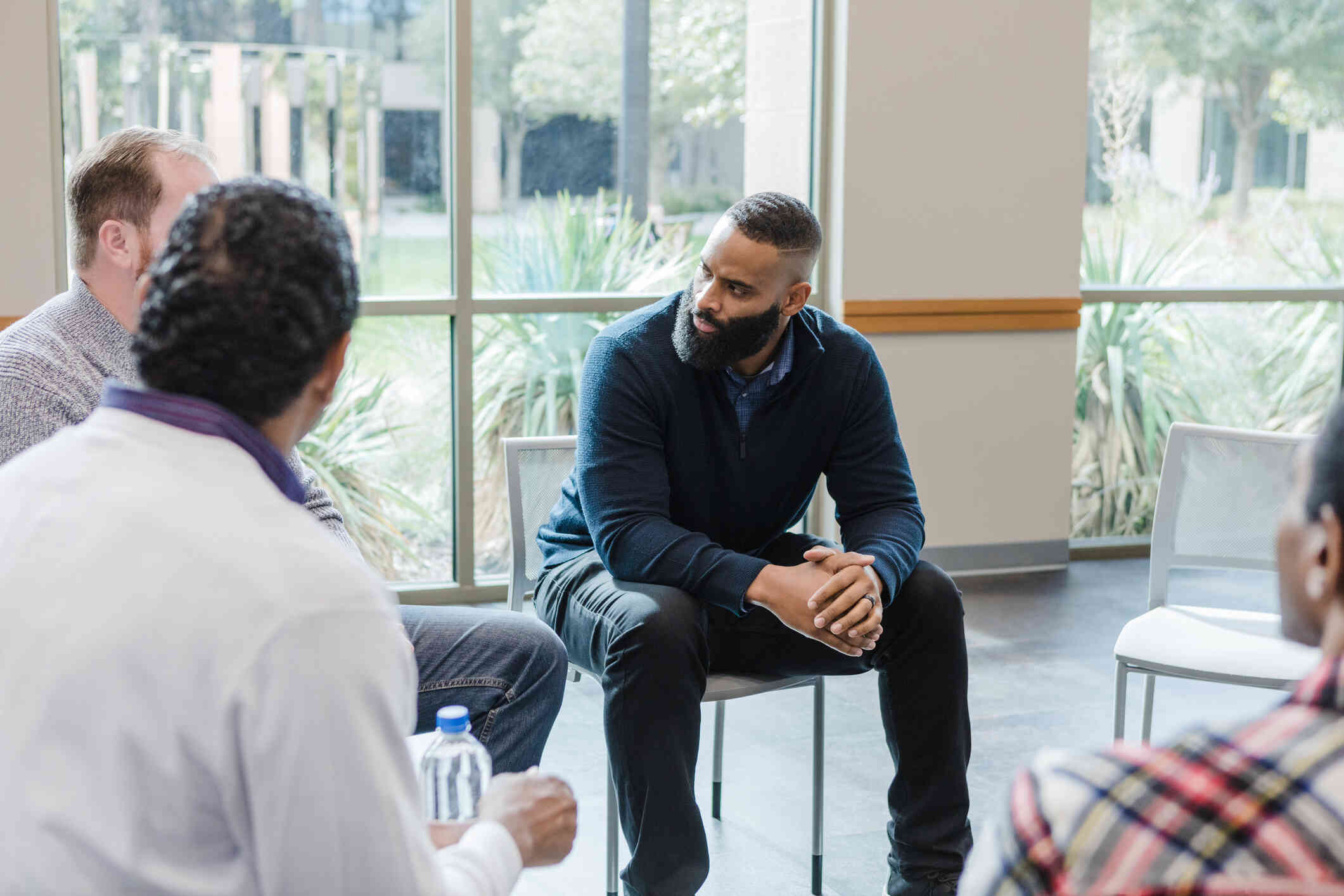
Stepping into a support group may feel intimidating at first, especially for those who’ve been conditioned to keep quiet or doubt their own perspective. However, these groups can often offer a place where it’s safe to speak and be heard by people who understand.
Support groups can allow for shared stories and experiences, witnessing others' progress, developing a sense of mutual understanding and validation, and learning tools for healing and growth.
The power of shared experience
- “I thought I was the only one.”
- “That’s exactly what happened to me.”
- “I didn’t realize it had a name.”
In these spaces, survivors can begin to see that their pain is real and shared rather than imagined or exaggerated. That awareness can be the beginning of transformative change.
Emotional validation and empowerment
Being believed can often feel healing in itself, as many narcissistic abuse survivors report feeling invisible, doubted, or dismissed.
In a support group, members are often gently encouraged to:
- Explore their own truth without shame
- Identify their needs and limits
- Practice setting boundaries without guilt
- Rebuild their narrative with strength and compassion
Breaking isolation and rebuilding connection
In many cases, abuse cuts people off from others. It may isolate them socially or make them fear reaching out. Support groups can often act as a bridge to engaging in safe, healthy interactions again. These groups can help survivors rebuild trust in others, experience respectful communication, and begin forming new, healthier relationship patterns.
BetterHelp State of Stigma 2026 — nationally representative survey of 2,000 U.S. adults
Finding the right abuse support group for you: What to look for
Not all support groups are the same, and finding the right one for you can make a difference in your experience. When exploring options, it may help to consider:
- Group size. Smaller groups may feel more intimate, while larger ones can offer diverse perspectives.
- Focus. Some groups center specifically on narcissistic abuse, while others address broader trauma or domestic violence. Some may be for women or LGBTQ+ people or older people specifically, while all are welcome at others, and some may have ties to a religious faith, while others are secular.
- Moderation style. Professional therapists lead some groups, while others are peer-led. Both can have value, depending on your comfort level and needs.
- Group rules. Are they focused on safety, respect, and boundaries?
Taking time to assess these factors can help you feel more at ease when you join.
Finding a narcissistic abuse support group online
Support groups may be available in your area, such as through clinics, domestic violence shelters, hospitals, community centers, libraries, mosques, churches, temples, or synagogues. In addition, there are growing numbers of virtual spaces where survivors can connect. Some reputable organizations that offer online group support resources include:
Integrating support groups into your mental health journey
While groups can be an integral part of recovery for some, they may not be a replacement for comprehensive, professional mental health care. Finding the right mix of support for your situation as a top priority may help you build a strong foundation that supports long-term mental health on your healing journey.
For survivors of abuse, some complementary approaches to attending a support group might include:
- Attending individual therapy, where you can receive personalized insights and focused emotional care
- Practicing boundaries and self-care in real-life settings
- Using journaling or expressive writing to reflect
- Practicing meditation or mindfulness to ground the nervous system
- Reading or listening to survivor stories to reinforce hope
Seeking individual therapy for additional support
While support groups can offer community and validation, therapy can provide a space to address the complex feelings that often come with narcissistic abuse in a personalized, one-on-one setting. With the guidance of a qualified professional, survivors may be able to process their experiences at a pace and depth that’s uniquely tailored to them.
Some therapy methods that may be used to address abuse include trauma-focused cognitive behavioral therapy (CBT) and eye movement desensitization and reprocessing (EMDR), among others.
Exploring the option of online therapy for mental health
For many people, online therapy can be a more convenient way of seeking one-on-one talk therapy. Since sessions take place entirely online, there’s no commuting required, which can make it easier to fit sessions into your schedule. While online therapy is often more affordable than in-person sessions without insurance, many providers on BetterHelp now accept major insurance carriers. Coverage depends on your state, plan, provider, and availability. When sessions are covered, members typically pay an average copay of about $23 per session.
BetterHelp accepts insurance through many major insurance plans. Insurance availability and coverage may vary by state, plan, provider network, and therapist availability, and deductible status.
Eligible members' average copay is $23 per session. During signup, enter your insurance information to view available options and estimated costs.
Research suggests that online therapy can often be just as effective as in-person therapy, including when it comes to treating conditions like depression, anxiety, and other trauma-related symptoms. Additionally, expansive online networks may make it easier for individuals to connect with a provider who is experienced in trauma therapy or in supporting survivors of abuse.
Takeaway
What is the support group for victims of narcissists?
Various support groups for survivors of narcissistic abuse are available. You might be able to find one through your local library, hospital, clinic, mosque, temple, church, or synagogue. You can also explore virtual support group options.
What is the best therapy for narcissistic abuse?
A person who survived narcissistic abuse will typically benefit from some form of trauma-informed therapy. This approach involves the provider being sensitive to what the client has been through, avoiding retraumatization, and helping them rebuild their sense of self.
Will I ever recover from narcissistic abuse?
It is possible to recover from the effects of narcissistic abuse, particularly with the right support. An important step on your journey may be to connect with a therapist whom you feel is a good fit. They can guide you through the recovery process in a compassionate and trauma-informed manner.
What happens to narcissistic abuse survivors?
Survivors of abuse perpetrated by someone with narcissistic traits or narcissistic personality disorder may experience a variety of mental health impacts due to their experiences. Some examples include post-traumatic stress disorder, anxiety disorders, hypervigilance, low self-esteem, and a fragmented sense of identity. That said, it is possible to meaningfully address these effects and move forward toward healing with the right professional support. A therapist can help you understand that the abuse wasn't your fault and support you in finding healthy ways to cope with what happened to you.
How to break a narcissistic abuse cycle?
Breaking the cycle of narcissistic abuse can be difficult for a survivor to do. Setting boundaries and remaining in close contact with one’s support system may help, but ultimately, leaving the relationship may be necessary. Resources like the National Domestic Abuse Hotline can help a person create a safety plan for their exit.
How to manage narcissistic abuse?
Regularly interacting with a narcissistic abuser can be difficult to manage. Setting boundaries and remaining close with your social support system may be helpful. However, ultimately, creating a plan to limit contact with the person or exit the relationship is often necessary.
How to not let narcissistic abuse affect you?
Setting boundaries and keeping your support system close may help you cope with narcissistic abuse. However, taking steps to limit your contact with this person or exit the relationship altogether may ultimately be necessary in many cases in order to preserve your well-being.
What trauma triggers after narcissistic abuse?
A person who is experiencing post-traumatic stress disorder due to past experiences of narcissistic abuse may have any number of triggers. These are typically unique to the person and what they experienced and could range from the sound of footsteps on the stairs or a key in the door to a person questioning one's own perceptions or memories.
How does narcissism respond to trauma?
A person with narcissistic tendencies or narcissistic personality disorder may experience these traits or symptoms specifically due to past trauma. In response to new trauma, a person could experience any number of unique and personalized effects.
What mental illness is caused by narcissistic abuse?
Narcissistic abuse could exacerbate or contribute to any number of mental health conditions in a survivor. Some examples include post-traumatic stress disorder, panic disorder, and depression.
Does BetterHelp accept insurance?
Yes. BetterHelp accepts insurance through major insurance plans. Insurance availability and coverage may vary by state, plan, provider network, and therapist availability. Eligible members’ average copay is $23 per session. Check your in-network status on the BetterHelp site through the sign up flow. For a full breakdown of how BetterHelp works with insurance plans, see our detailed guide on BetterHelp insurance coverage.
- Next Article
This article provides general information and does not constitute medical or therapeutic advice. Mentions of diagnoses or therapy/treatment options are educational and do not indicate availability through BetterHelp in your country.
BetterHelp insurance availability, coverage, and cost may vary by state, plan, provider network, therapist availability, and deductible status.